

Texas recruiting trends are moving fast enough that baseball families need a calm plan, not a rush to chase every camp, post, or early verbal offer. The strongest dated recruiting data in the research comes from national football recruiting and Texas NIL law, not verified baseball commitment totals. That distinction matters. Baseball parents can still learn from the timing pressure, the NIL rule changes, and the way families are reacting to early commitments, but they should not treat football numbers as a direct baseball ranking system.
For Texas baseball families, the useful lesson is practical: build a recruiting file early, keep development first, and avoid making a college choice before the player has enough physical, academic, and competitive maturity to understand the fit. A freshman or sophomore who throws harder, gains strength, or grows into a new defensive home can look very different by junior spring. The goal is to be prepared early without forcing a decision early.
What Texas recruiting trends Mean For Baseball Families
Texas recruiting trends And Early Contact
National recruiting behavior has shown that high-end prospects are committing earlier. In the 2026 cycle, 21 of the nation’s five-star football recruits had committed by May 15, 2026, compared with 15 at the same point in the 2025 cycle; about 67% of Top-100 prospects had committed by mid-year, compared with 53% at the same point in the prior cycle, according to Yahoo Sports recruiting reporting. That is not baseball-specific data, but it does show a wider recruiting habit: programs, athletes, and families are trying to reduce uncertainty earlier.
For baseball, Texas recruiting trends should be read with sport-specific caution. Baseball evaluation depends heavily on physical projection, verified game performance, defensive value, arm health, swing decisions, and how a player handles better velocity over time. A sophomore commitment can look attractive from the outside, but parents should ask whether the school fit still makes sense if the player’s role changes, the coaching staff changes, or the athlete develops later than expected.
What Parents Can Control First
Parents can control organization better than timing. Keep a short player profile with graduation year, height and weight, throwing and hitting side, primary and secondary positions, academic information, video links, and coach contact information. Update it after real changes, not after every good weekend. College coaches do not need a family’s full scrapbook. They need accurate information and a reason to keep watching.
That same file should help families decide which events make sense. A player who needs innings, at-bats, or defensive reps may gain more from the right local schedule than from a distant event with limited playing time. Families planning exposure trips can use a focused approach similar to our West Texas Showcase exposure tips, especially around profiles, coach emails, and travel planning.
Early Commitments Without Panic
Separate Readiness From Attention
Early attention is not the same as readiness. A player may receive interest because of size, speed, velocity, or tournament visibility, but that does not mean the family has enough information to pick a college. Parents should slow the process down with better questions: What position does the school project for the player? How many players at that position are already in the program? What academic support is available? How does the coaching staff view summer development, strength work, and throwing volume?
In Texas baseball, the temptation to compare timelines can create stress. One player may commit after a strong summer before junior year. Another may need senior-year growth, junior college interest, or a smaller four-year fit. Both paths can be valid. The family’s job is not to win a social media race. The family’s job is to help the athlete choose a place where he can study, train, compete, and handle normal college pressure.
Use A Simple Family Checkpoint
Before treating any offer or serious interest as a final direction, families can pause for a short review. The review does not need to be formal, but it should be honest. If the player cannot explain why the school fits beyond gear, conference name, or online attention, the process may be moving too fast.
- Ask the athlete to describe the baseball fit, academic fit, distance from home, and likely role.
- Confirm that current high school and travel coaches agree the timeline is reasonable.
- Review cost, scholarship expectations, roster size, and family travel demands.
- Keep communication respectful and player-led as the athlete matures.
- Do not let one event or one conversation replace a longer development plan.
NIL Rules Parents Should Treat Carefully
Texas NIL Limits Are Part Of The Plan
NIL has changed how many families talk about recruiting, but it should be handled with care. The University of Texas System’s legislative summary for the 89th regular session said Texas law prohibits institutions from preventing student-athletes from profiting from NIL or obtaining legal representation for related matters. The same summary said NIL agreements with prospective athletes under age 17 are prohibited unless they are already enrolled, and it addressed compliance with rules or court orders connected to the House v. NCAA settlement agreement UT System legislative summary.
Parents should treat NIL as a compliance topic before they treat it as a money topic. A baseball player’s eligibility, school relationship, and reputation can be harmed by sloppy promises, unclear contracts, or adults who push too hard. If a real NIL opportunity appears, families should ask the high school, the college compliance contact when allowed, and qualified legal help before signing anything. This is not a place for handshake deals or pressure from outside voices.
Keep The Player’s Name Clean
A young player’s name matters long before any NIL value exists. Families should avoid exaggerating offers, posting private coach messages, or presenting interest as a commitment. A clean public profile is simple: accurate measurables, game video, academic progress, team information, and respectful communication. That approach will not guarantee a roster spot, but it lowers avoidable risk.
Building A Baseball Recruiting Plan
Start With Development Markers
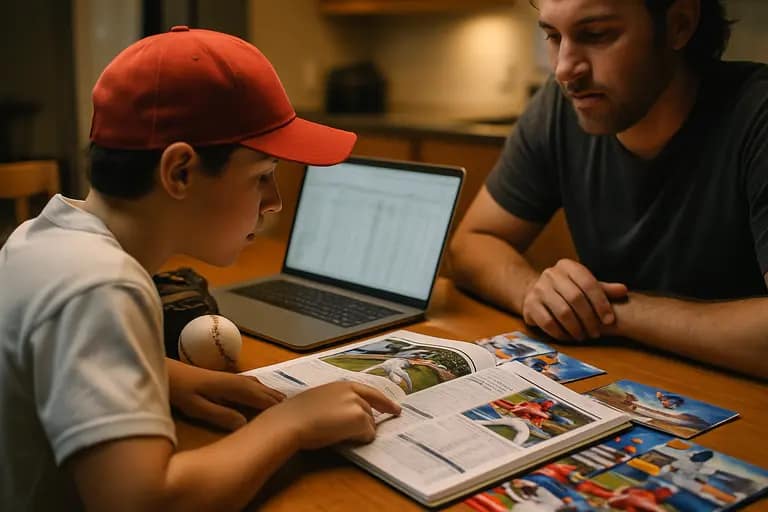
A good recruiting plan begins with baseball skills, not graphics. Pitchers should know how their arm feels, how often they are throwing, and whether their command holds when the opponent improves. Hitters should track quality at-bats, contact against better velocity, swing decisions, and defensive value. Position players should know whether they can stay at a premium position or need to grow into another role.
Parents do not need to turn the home into a scouting office. They can keep the plan simple by asking coaches for three development priorities every few months. Those priorities might include strength, speed, receiving, first-step defense, strike throwing, two-strike approach, or nutrition habits. The point is to connect recruiting exposure to actual improvement.
Match Events To The Player’s Stage
Not every player needs the same schedule. A player with strong grades, clean video, and clear varsity production may need targeted communication with schools that fit. A player still growing into his body may need more practice time and fewer long trips. A pitcher returning from arm soreness should not chase exposure before he is ready to compete safely. Families should make event decisions based on health, reps, school fit, and budget.
Texas travel can wear down a family quickly. A weekend trip may include missed schoolwork, late drives, hotel costs, meals, and limited rest. If an event does not match the player’s current level or recruiting list, it may not be worth the strain. Good planning protects both the athlete and the household.
How Texas recruiting trends Should Shape Baseball Plans
Used well, Texas recruiting trends can help baseball parents ask better questions. The lesson from early national commitments is not that every Texas player must commit sooner. The lesson is that families should be ready with accurate information, steady communication, and a patient view of development. The lesson from NIL law is not that every athlete should seek a deal. The lesson is that parents must understand age limits, compliance concerns, and the value of getting advice before signing anything.
The best recruiting plan gives the player room to grow. It keeps academics visible, training consistent, health protected, and college fit honest. If attention comes early, the family can respond without panic. If attention comes later, the player still has a record of progress. That is the parent role: provide structure, ask grounded questions, and keep the young athlete focused on becoming a better baseball player.