

Little League Participation in the 2026 Little League Baseball World Series was not upcoming as of October 16, 2026. The Williamsport event window was scheduled for August 19 through August 30, 2026, so this is best read as a structure review for Texas families, coaches, and community volunteers who want to understand how teams reached that stage.
For youth baseball families across Texas, the value is not in chasing a headline. It is in seeing how a community-based tournament path is organized, how bracket pressure builds, and how local programs can prepare players for regional play without losing sight of school, rest, and family needs.
How Little League Participation Was Structured In 2026
A 20-Team Field With Equal Bracket Size
Beginning in 2022, the Little League Baseball World Series expanded to a 20-team format, with 10 teams from the United States and 10 international teams, according to the official Little League expansion FAQs. That structure was still the participation model described for the 2026 event in Williamsport, Pennsylvania.
The 20-team field matters because it keeps the U.S. side and the international side balanced at the World Series stage. Each bracket had 10 teams. The U.S. bracket produced a U.S. champion, and the international bracket produced an international champion. Those two bracket winners then met in the World Championship game.
Regional Access Before Williamsport
The path to Williamsport ran through regional qualifying tournaments held between March and August 2026. On the U.S. side, the 10 regions were Great Lakes, Metro, Mid-Atlantic, Midwest, Mountain, New England, Northwest, Southeast, Southwest, and West. Each U.S. regional tournament sent one team forward.
On the international side, the listed 2026 regions were Asia-Pacific, Australia, Canada, Caribbean, Curaçao, Europe & Africa, Japan, Latin America, Mexico, and Panama. Each international region also sent one champion to the World Series field.
The international side included a fixed three-year rotation involving Panama, Puerto Rico, and Curaçao. In that rotation, each country receives an automatic bid in two of every three consecutive years, while in the third year it must qualify through its regional tournament. For 2026, the research notes identified Curaçao and Panama regional winners as direct-entry teams after a January 20, 2026 announcement.
Why The Format Matters To Texas Families
What Little League Participation Meant For Texas
Texas baseball families tend to think in terms of fields, innings, pitch counts, travel weekends, and whether an event supports the player’s long-term growth. Little League Participation at the World Series level gives families a clear example of a tiered structure: local play feeds regional qualification, and regional winners feed a national or international stage.
That structure also helps parents frame expectations. A team does not arrive at Williamsport because one player has a loud weekend. It gets there through a community pathway, a regional bracket, and a roster that can handle pressure across more than one game. That is useful context for Texas coaches building habits around defense, baserunning, strike-zone control, and dugout maturity.
The Southwest Region name will naturally catch attention for many Texas readers because regional identity is part of how youth baseball families talk about tournament access. For a nearby development lens, our discussion of JLB Southwest Region participation connects that same idea to player growth, confidence, and community ties.
Costs And Community Planning
One detail that matters for community programs is that all teams advancing to the World Series, both U.S. and international, had travel, lodging, meals, and accommodations paid for by Little League International. That does not erase every cost a family or local league may face before qualification, but it does reduce the burden at the final stage for teams that earn their place.
For Texas leagues, that point can shape planning conversations. Local programs still need to think about uniforms, tournament travel before Williamsport, volunteer time, practice access, and communication with families. A clear cost message keeps the focus on preparation rather than rumor. It also helps coaches explain why fundraising and scheduling should start early, especially if a team is moving through play from spring into the summer regional window.
Player Development Lessons From The Bracket
Double-Elimination Pressure
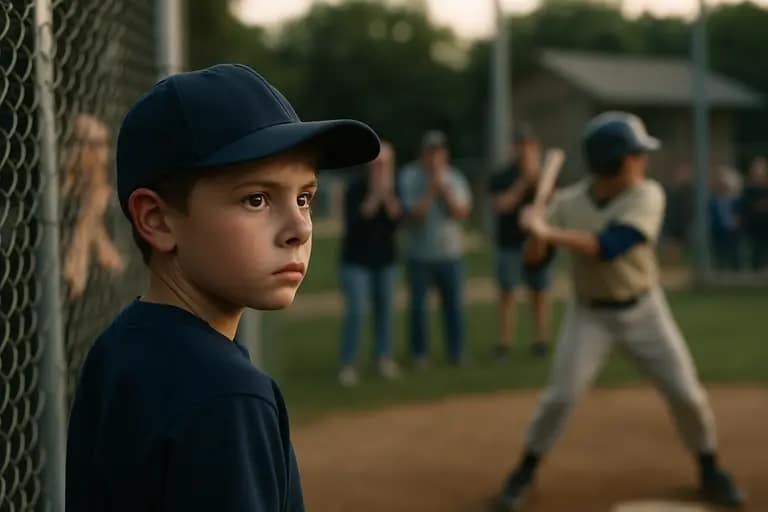
Phase One in each bracket used a double-elimination format. A team had to lose twice to be eliminated. That format rewards depth more than a one-game showcase does. It asks teams to recover from a loss, manage arms carefully, keep bench players engaged, and hold steady through changing game states.
For player development, that matters. A young pitcher may need to understand that his role is not only about the first inning of the first game. A utility player may need to be ready for a defensive assignment later in the bracket. A catcher may need the endurance to guide multiple arms across a week. Those lessons fit the way strong Texas programs build habits before high school baseball becomes more demanding.
Single-Elimination Finish
At the end of Phase One, the winners’ bracket finalist and the losers’ bracket finalist in each bracket advanced to Phase Two. Phase Two shifted to single-elimination games: the U.S. Championship game, the International Championship game, a Consolation game between the losing teams from the U.S. and international semifinals, and the World Championship game between the U.S. and international bracket winners.
That shift changes the teaching points. Double elimination gives a team room to respond after a loss. Single elimination asks players to execute with no safety net. Coaches can use that contrast in practice by mixing development days with pressure sets: first-and-third defense, two-strike hitting plans, late-inning bunt coverages, and communication on balls in the gap.
- Build practices that include both recovery work and high-pressure situational reps.
- Prepare families for a March-through-August pathway instead of treating the regional stage as a single weekend.
- Teach every roster spot a clear role so players stay ready across bracket play.
- Keep development goals visible even when tournament results draw attention.
What Little League Participation Teaches Texas Programs
Little League Participation in 2026 showed a clear tournament model: 20 teams, equal U.S. and international brackets, regional qualification, double-elimination opening play, and single-elimination championship games. For Texas families, that structure is a practical teaching tool, not just a World Series detail.
The lesson for community programs is to prepare players for more than one type of baseball moment. Some days ask for patience after a loss. Some days ask for a clean inning with the season on the line. Some days ask parents to support the group through travel, weather, meals, and long waits between games. A healthy program talks about all of that before the bracket begins.
For coaches, the 2026 structure reinforces the value of roster depth and steady routines. For parents, it shows why communication matters before a team reaches a regional stage. For players, it is a reminder that development is built through repeated reps, team trust, and the ability to compete without letting one inning define the next one.