

Houston Cougar Baseball Camps give Texas families a fall training option tied to a college baseball setting, with sessions listed for high school teams, youth hitters, pitchers and older prospects at Don Sanders Field. As of September 16, 2026, the key point is timing: several summer camps had already finished, while multiple fall 2026 events were still scheduled on the University of Houston camp calendar.
For player development, the value is not in chasing a name on a flyer. The value is in matching the session to the player’s age, current workload, position needs and school schedule. A 10-year-old learning a repeatable swing plan needs a different camp fit than a junior pitcher trying to understand pitch data. Families should treat each camp as a training block, not a shortcut to recruiting attention.
Houston Cougar Baseball Camps Fall Options
Fall Schedule And Format
The official Cougar Baseball Camps page listed several fall 2026 events at Don Sanders Field at Darryl & Lori Schroeder Park, 3100 Cullen Blvd, Houston, TX 77004. The Team Camp September 19-20, 2026 was scheduled for high school teams, with registration ending on September 19, 2026 and a listed fee of $2,500. A separate high school Team Camp was also listed for October 4, 2026, with the same $2,500 fee and registration ending on October 4, 2026, according to the official camp schedule.
For individual skill work, Hitting Under the Lights was listed from September 21 to November 16, 2026 for ages 7-18, with evening sessions scheduled from 6:00 p.m. to 8:00 p.m. and costs ranging from $125 to $500 based on the date options. Pitching Under the Lights was listed from September 28 to October 26, 2026 for pitchers ages 8-18, also from 6:00 p.m. to 8:00 p.m. For pitchers age 13 and older, the listing stated that TrackMan technology would be used to review pitch velocity, movement, spin and related pitch traits.
Houston Cougar Baseball Camps By Age Group
Houston Cougar Baseball Camps covered a wide age range in the research notes, but families should separate youth instruction from prospect exposure. The younger camp options were designed more around skill teaching, repetition and confidence. The older events, such as the 2026 Elite Prospect ID Camp scheduled for October 25, 2026, were listed for grades 9 through JUCO sophomore. That event was scheduled to start at 10:00 a.m., with a pro-style showcase at 9:00 a.m. followed by games. The research notes did not provide a clear fee for that listing, so families should confirm cost directly before registering.
The age spread matters. Players ages 7-12 often need simple cues, clean throwing habits, basic hitting rhythm and defensive footwork. Players in grades 9-12 need more pressure-tested reps, clearer positional feedback and a better understanding of how their present tools compare within a camp setting. JUCO sophomores need a more practical lens: health, role, measurables, academic fit and video that can support communication with college staffs.
Age Fit And Development Value
Youth Players Need Fundamentals First
The Premier Skills Youth Camp for ages 6-12 was offered June 1-4, 2026, cost $250 and was described as a half-day camp focused on refining fundamentals with University of Houston coaches and players. That camp had already concluded by September 16, 2026, based on the listed dates from the Premier Skills Youth Camp listing. For families evaluating future versions of that type of camp, the best question is not whether the setting looks impressive. The better question is whether the player leaves with one or two clear adjustments he can repeat at home.
At the youth level, high-quality camp work should stay simple. A hitter may need to learn posture, balance and barrel direction before worrying about exit velocity. A young infielder may need better ready position, glove presentation and first-step angles. A young pitcher may need a safer catch-play routine and better command intent before more advanced pitch design becomes relevant.
Older Players Need Measurable Feedback
For high school players, Houston Cougar Baseball Camps can be useful when the player knows what he is trying to measure. A pitcher attending an under-the-lights session should walk in with a goal tied to strike quality, fastball command, secondary pitch feel or recovery after throwing. If TrackMan data is available for pitchers age 13 and older, the player and family should ask how to interpret that feedback in a development plan rather than treating one reading as a final judgment.
Position players should take the same approach. A hitter in the fall should know whether he is working on swing decisions, contact quality, adjustability against off-speed pitches or using the opposite field. Defensive players should pay attention to footwork, exchange quality and throwing accuracy under time pressure. Camp reps help most when they connect to the player’s weekly training, not when they stand alone as a one-day event.
- Best fit for ages 7-12: fundamental instruction, confidence, basic swing and throwing habits.
- Best fit for ages 13-18: skill feedback, position-specific work, data review where available and competitive reps.
- Best fit for grades 9-JUCO sophomore: showcase structure, game action and a clearer sense of college-level expectations.
Planning Fall Work Around School Baseball
Workload And Recovery Should Drive Choices
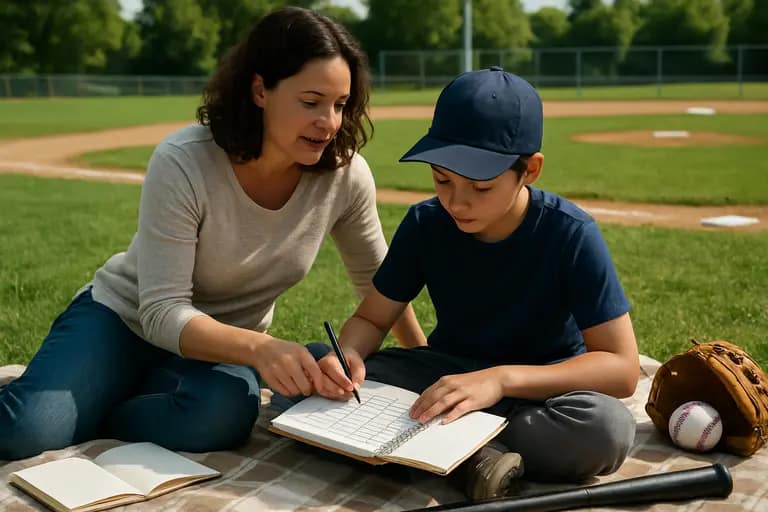
Fall baseball in Texas can create schedule pressure fast. Players may be balancing school work, strength training, team practices, private lessons and weekend events. A camp can help, but only if it fits the full workload. A player who throws heavy innings on weekends may not need another high-intensity mound day two days later. A hitter trying to rebuild his swing may benefit from a weekly evening hitting block, but he still needs enough rest to keep his timing and body control.
Families should also factor in Houston traffic and school-night timing. The under-the-lights sessions were listed from 6:00 p.m. to 8:00 p.m., which can work well for players in the Houston area, but it still requires planning for meals, homework and sleep. A late return home can affect recovery, especially for younger players. For a broader Texas parent lens on rest, heat and fall schedule balance, our fall baseball parent guide connects well with this type of camp planning.
Team Camps Serve A Different Purpose
The listed team camps on September 19-20, 2026 and October 4, 2026 were high school team events, not individual youth workouts. That changes the evaluation. A coach may use a team camp to get live-game looks, test roster roles, build communication and expose players to a college venue setting. For players, the main benefit is competing inside a team structure where execution matters more than personal stat chasing.
Parents should avoid reading too much into one weekend. A player may get fewer plate appearances than expected, face an unfavorable matchup or play a secondary position because of roster needs. That does not make the camp wasted. Team events can still show coaches how a player handles dugout communication, defensive responsibility, baserunning decisions and game pace.
Why Houston Camps Matter For Player Development
Houston Cougar Baseball Camps matter most because they give local players a structured college-campus training setting without requiring long-distance travel. For families in Greater Houston, that can reduce cost, missed school time and fatigue. The location at Don Sanders Field also gives players a chance to train in a baseball-specific environment tied to a Division I program, while still keeping the focus on daily skill growth.
The best use of these camps is selective. A younger player may need one fundamentals camp and a steady home practice plan. A middle school pitcher may need a fall throwing checkpoint and clear recovery rules. A high school prospect may need a showcase setting, but only after his body, grades, video and baseball skills are ready for that format.
For Texas families, the camp calendar should support the player’s long-term plan. Pick the event that matches the athlete’s age and current needs, ask direct questions about instruction and feedback, then turn the camp takeaways into weekly work. That is where Houston Cougar Baseball Camps can become more than a date on the schedule: they can become one part of a measured development plan.