

Texas Baseball Ranch opened its fall and winter development window with an Offseason Night Class that began on September 2, 2026, and runs through January 27, 2027. As of September 4, 2026, that class is ongoing, with sessions scheduled Mondays and Wednesdays from 6:30 p.m. to 8:00 p.m. Offseason Night Class details
For Texas families, that timing matters. The fall school calendar can pull players in several directions: classes, homework, high school fall activity, private lessons, strength work, and weekend baseball. A twice-weekly evening class gives families a defined training block without asking every player to give up full weekends during September, October, November, December, and January.
What Texas Baseball Ranch Offers This Fall
Texas Baseball Ranch Night Class Structure
The night class is the clearest anchor in the fall and winter plan. It gives players a repeated Monday-Wednesday rhythm from early September into late January, rather than a single camp experience that ends after a weekend. That does not guarantee results for every athlete, and families should be careful with any program promising one fixed outcome. The supported takeaway is simpler: the schedule is built for steady contact points across the school year.
The class window also creates room for coaches and families to track how a player responds to instruction over time. A pitcher or position player can show up after school, train during a set evening period, return home, and repeat the work two days later. In youth development, that kind of routine can be easier to manage than scattered one-off sessions, especially for players balancing grades and team obligations.
Pitching, Catching, And Coach Weekends
The broader fall and winter program packet lists monthly Elite Pitchers Boot Camps for players ages 12 and older from September through February, an Elite Catchers Boot Camp set for December 11-13, 2026, for catchers ages 13 and up, and a Coach Boot Camp returning December 4-5, 2026, after several years off the schedule. August/September/October 2026 program packet
That mix is worth noticing because it does not treat development as only a pitcher issue. Pitchers receive the most frequent camp windows, but catchers and coaches also have dedicated dates. For a local baseball community, that matters. A pitcher can improve his own training habits, but the receiving target, practice plan, throwing workload, language from coaches, and dugout leadership all shape how that progress holds up once team activity returns.
What Families Should Read In The Schedule
Registration Timing And Limited Enrollment
The program packet lists the Elite Pitchers Boot Camps at $2,299, with a $300 discount available for registration by August 31, 2026, and only 24 spots available for those elite boot camp sessions. Since September 4, 2026, is after August 31, that discount deadline has passed. The practical point now is not early savings; it is whether a family can still find a date that fits school, travel, recovery, and budget.
Limited enrollment can help a program protect teaching time, but families still need to ask their own questions. What is the player ready to handle physically? How does a camp date fit around fall games or other training? Is the player old enough for the listed age group? Has the family planned enough rest before and after a high-volume weekend? Those questions are not signs of hesitation. They are part of responsible player care.
Younger Players And The October Window
The research notes also identify a Youth Elite Pitcher’s Boot Camp on October 3-4, 2026, from 8:30 a.m. to 5:30 p.m. for players ages 8-12. They also note that broader promotions may refer to this same window as a Youth Pitching Camp. Because the naming appears to overlap, families should verify the exact registration page and age rules before making plans.
For younger players, the key takeaway is not to copy older athletes. Ages 8-12 are still a foundation stage. Confidence, body awareness, catch-play habits, basic movement quality, and a healthy relationship with practice often matter more than chasing a single radar reading. Parents can use a youth camp date as a learning checkpoint, but the work after the camp should stay age-aware and family-aware.
- Check the exact camp name, date, age range, and daily time block before registering.
- Build rest into the week before and after any intensive weekend.
- Ask how the lessons will connect to the player’s regular team practices.
- Keep school workload, drive time, and recovery in the plan.
How Coaches Can Use The Winter Calendar
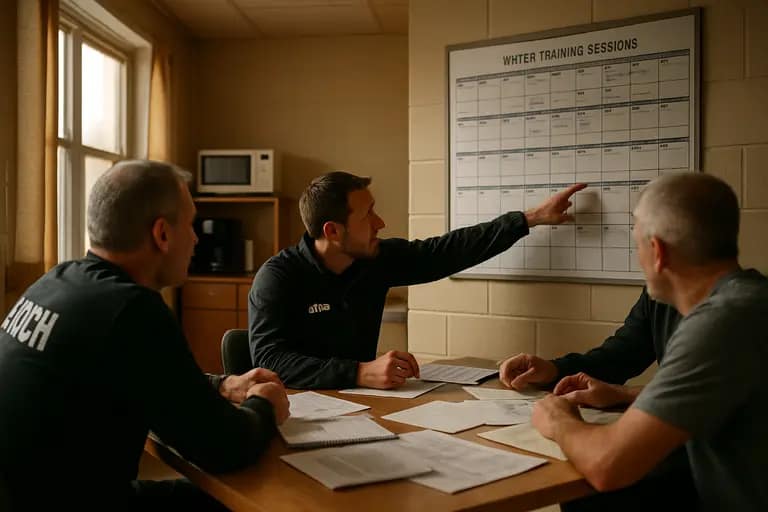
Practice Rhythm Between School And Travel Ball
The December 4-5 Coach Boot Camp is one of the more interesting parts of the plan because it targets the adults shaping the training environment. The research notes say the event gives coaches a chance to learn training methods directly from Coach Wolforth. That is a specific development lane: not only adding more player sessions, but giving coaches a place to study how instruction is organized.
Local coaches can use the fall and winter calendar to review their own practice habits. If a player attends a night class or specialty camp, the coach does not need to replace the work or compete with it. A better use is alignment. What cues is the player hearing? What drills are showing up often? What workload has the athlete already completed that week? Good communication keeps a player from receiving mixed messages every time he changes fields.
This is where community programs connect with the broader Texas baseball pipeline. The strongest development settings usually include players, parents, private instructors, team coaches, and catch partners working from shared information. For more on that player-centered approach, the same idea connects naturally with individual development in youth baseball events, especially for families weighing camps against tournaments and team commitments.
Specialty Positions Need Their Own Teaching Time
The December 11-13 Elite Catchers Boot Camp, listed for ages 13 and up, points to a need that can get missed in winter training. Catchers are not just receivers for pitcher development. They manage stance work, transfer patterns, blocking, throwing, leadership, game awareness, and the daily physical cost of the position. A focused catching weekend can give that position its own language and practice space.
That does not mean every catcher should attend every specialty event. It means families should recognize that the position has different demands than a generic hitting or throwing session. A high school catcher, a first-year 13U catcher, and a player still splitting time at multiple positions may all need different plans. The listed age range gives families a starting point, not a full decision by itself.
Why Texas Baseball Ranch Fall/Winter Plans Matter
The main takeaway from the Texas Baseball Ranch fall and winter schedule is structure. There is a long-running weeknight class from September 2, 2026, through January 27, 2027. There are monthly intensive pitcher options for ages 12 and older from September through February. There are December windows for coaches and catchers. There is also an October youth pitching date in the research notes, with enough naming overlap that parents should confirm details before acting.
For Texas baseball families, that structure can help turn the offseason into a plan rather than a collection of random workouts. The best use is not to sign up for everything. The best use is to match the player’s age, position, health, school load, and team calendar to the right training window. Texas Baseball Ranch gives families several dates to consider; the family’s job is to choose the one that fits the athlete in front of them.