

Texas showcase tips should start with the player, not the event flyer. For Texas baseball families, a showcase can be useful when it matches the athlete’s age, health, skill level, academic path, and recruiting timeline. It can also become wasted money or added arm stress if the family signs up for every event without a plan.
As of October 10, 2026, some Texas showcase dates referenced in recent parent research have already passed. The Stars Over Texas Fall Showcase, for example, was listed for September 18–20, 2026, and its listed payment deadline of October 4, 2026, has also passed. That does not help a family register now, but it does show why parents need a calendar, a payment checklist, and a reason for choosing each event before the next showcase cycle opens.
The best parent role is not to sell a player from the stands. It is to help the athlete arrive healthy, prepared, rested, and ready to compete with clear expectations. That approach fits Texas elite baseball because development still matters more than one radar reading, one batting practice round, or one short conversation near the dugout.
Texas Showcase Tips Before Registration
Match The Event To The Player
Before paying for a showcase, ask what the player needs from it. A freshman who needs game experience may not need the same event as a junior who has current video, verified measurables, and realistic college targets. A pitcher returning from soreness should not treat a showcase as a test of toughness. A hitter working through swing changes may need live at-bats more than another timed workout.
Good Texas showcase tips begin with a simple question: what would make this event worth the cost and workload? The answer might be updated video, a chance to compete against stronger arms, feedback from a coach, or exposure to schools already on the player’s academic list. If the family cannot name the purpose, it may be better to wait.
Check Workload Before You Pay
Pitchers need special attention. A youth baseball study found that excessive showcase participation was a statistically significant predictor of injury, even after adjusting for age youth baseball injury study. That does not mean every showcase is unsafe. It does mean parents should count bullpens, tournament innings, private lessons, velocity sessions, and school workloads as one total arm-care picture.
Families should also understand why velocity chasing has raised concern across baseball. MLB’s 2024 pitcher injury report noted that at the Perfect Game National Showcase, the number of players throwing 95 mph or harder rose from 3 in 2018 to 36 in 2024 MLB pitcher injury report. For a young pitcher, the goal should not be to create a one-day max effort at the expense of health. The goal should be repeatable delivery, command, recovery, and steady growth.
- Write down recent innings, bullpen dates, high-effort throws, and days off before registering.
- Ask the player directly about arm soreness, fatigue, sleep, and stress before the event.
- Build at least one full day each week without organized baseball activity when possible.
- Do not use a showcase to prove a player is healthy after pain; get appropriate medical guidance first.
- Skip extra mound work at the event if the player has already reached a reasonable workload.
Build A Player File Coaches Can Use
Keep The Information Current
A coach cannot evaluate what a family never sends or sends too late. Before a Texas event, parents can help the player organize a short player file with graduation year, position, height and weight if the family chooses to share it, school, summer team, contact information, GPA if appropriate, and recent video. Keep it honest. Do not inflate velocity, exit speed, pop time, or running times. Coaches will see the player live or on video, and trust matters.
The file should be easy to read on a phone. A long document full of claims is less useful than a short email with a schedule, jersey number, positions, and a video link. If the player has sent messages to college programs, track who received them and when. The parent can manage the calendar, but the player should learn to write the message in his own voice.
Understand Contact Limits
Recruiting contact rules vary by level, division, sport, and date. Parents should not assume silence from a coach means the player has no chance. In some periods, coaches may have limits on what they can say or when they can respond. The safe habit is to verify rules through official college or association resources before expecting direct contact.
This matters for Texas families because showcases often bring together players from different grad years. A 2027 player and a 2029 player may need very different communication goals. One may be trying to build real college dialogue, while the other may simply need feedback, experience, and cleaner video. Practical Texas showcase tips should fit the player’s recruiting stage rather than copying what an older teammate is doing.
Game-Day Parent Habits That Help
Give Coaches Space To Evaluate
Parents can hurt a player’s day without meaning to. Standing near evaluators, explaining every at-bat, asking for attention during the game, or correcting the player from the fence can add pressure. Coaches are there to watch the athlete compete, handle failure, communicate with teammates, and adjust between reps. Let the game show those traits.
A calm parent presence gives the player room to breathe. Help with food, water, shade, directions, and time management. Keep comments short after mistakes. The car ride home should not become a long review of every pitch. If the athlete wants feedback, ask what he felt first. That teaches ownership and keeps the parent from becoming the loudest voice in the development process.
Plan For Texas Conditions
Texas showcases can bring heat, long drives, spread-out complexes, and uneven meal timing. Families should treat logistics as part of performance. Pack water, electrolytes if the player uses them safely, extra socks, sunscreen, simple food, a towel, chargers, and any needed recovery items. Confirm field locations before leaving because multi-field events can change a family’s timing quickly.
For tournament weekends with heavy schedules, many of the same habits apply. Families who need a broader event-day checklist can review Perfect Game Texas parent tips and adapt the ideas to the next showcase or camp. The point is not to control every moment. It is to reduce preventable stress so the player can compete.
Post-Event Follow-Up For Texas Families
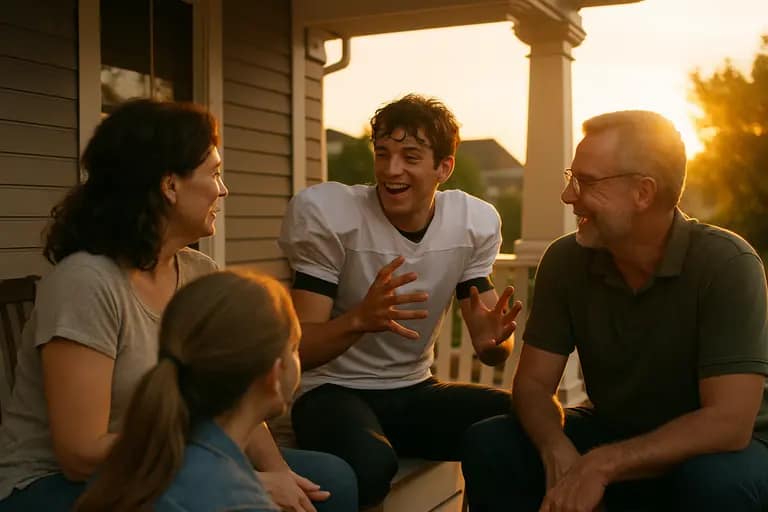
Review The Event Within Two Days
The work after the showcase is often where families lose value. Set aside 20 minutes within two days to review what happened while the details are fresh. Did the player face better pitching? Did he throw strikes? Did he run hard through every rep? Did he handle instruction well? Did the event produce usable video? Write down a few notes without turning the review into a trial.
Follow-up should be specific. If a coach had already received the player’s information, the player can send a short update with the date of the event, what position he played, and any new video. If no coach contact was expected because of age or rules, the family can still save video, update the player file, and share it later when the timing is right.
Separate Results From Development
A showcase can make a player feel seen, but it can also expose gaps. That is not failure. A hitter may learn he needs better swing decisions against firm velocity. A catcher may learn his receiving needs more quiet work. A pitcher may learn that his command drops when he tries to throw harder for scouts. Those lessons have value if the next month of training responds to them.
Parents should be careful with public comparisons after events. Texas baseball circles can feel small, and young players already know who threw hard or ran fast. Keep the home conversation centered on controllable habits: preparation, effort, recovery, coachability, and a training plan that fits the player’s body.
Texas Showcase Tips That Protect Development
Use Texas showcase tips as a filter, not a promise. No single event can guarantee recruiting interest, and no one-day performance should define a young baseball player. The better plan is steady: choose fewer events with clearer purpose, protect the arm, keep school information current, prepare the player to communicate, and follow up with care.
For Texas families, the right showcase is the one that supports the player’s next step without stealing from his health or confidence. If the event adds useful evaluation, quality competition, and a realistic next action, it may be worth the trip. If it only adds fatigue, cost, and pressure, patience may be the stronger baseball decision.