

The Fall Super Regional in Waller gave Texas youth baseball families a clear case study in how tournament preparation should work before, during, and after a Perfect Game weekend. As of October 20, 2026, the 2026 PG Super Regional NIT was no longer upcoming; it was held on October 3-4, 2026, in Waller, Texas, as listed through Perfect Game’s Crosschecker search. Because the research available here does not include game scores, bracket results, team lists, or player performance data, the most useful review is developmental: how families can manage workload, rest, meals, warmups, and recovery around a short, high-pressure tournament block.
For Texas families, the value of a weekend like this is not only the competition. It is the chance to test routines. A player learns how his body responds to early report times, multiple games, long gaps between first pitch windows, defensive innings, bullpen use, and travel. A parent learns how to track pitch use without panic. A coach learns where the roster needs more depth before the next event. Those lessons matter more than any single pool-play inning.
Fall Super Regional Planning After Waller
Fall Super Regional Timing And Site
The October 3-4 event window in Waller gave families a compact two-day tournament format. That type of schedule leaves little room for poor preparation. Bags, meals, water, shade, catcher gear, footwear, uniforms, and arm-care items should be handled before arrival, not during the first warmup window. A short event can still create a heavy physical load if a player catches one game, pitches in another, runs bases repeatedly, then returns the next day with limited sleep.
The research notes for this event point to rules and health practices that fit a family checklist. A preparticipation physical about four to six weeks before a season or tournament block was recommended in the medical research provided. That timing gives families room to address concerns before a player is placed into a multi-game setting. It also gives coaches better information about any limits that need to be respected.
Texas tournament preparation also benefits from a calm travel rhythm. Families should confirm the address, estimate drive time, plan for food that will not sit too long in heat, and decide how the player will recover between games. For a broader packing and schedule routine, this Texas tournament checklist fits the same kind of weekend planning families needed in Waller.
What Families Could Review After The Event
After a completed tournament, families should not limit the review to batting average or final score. A better review asks practical questions: Did the player sleep enough before both days? Did he eat early enough to avoid feeling heavy before first pitch? Did he hydrate before the drive, or only after warmups began? Did parents and coaches agree on pitching availability before the lineup card was built?
The answers should shape the next training week. If a player looked flat late in the day, the issue may have been food timing or poor rest. If a pitcher struggled to recover, the issue may have started with bullpen volume, not only game pitches. If a catcher’s legs faded, his week may need more recovery and less lower-body fatigue before the next event.
Pitching Rules That Shape Player Use
Fall Super Regional Pitch Count Checkpoints
Perfect Game’s published pitching restrictions for the 2026 13U PG Houston Super Regional NIT listed key workload controls, including a 95-pitch or 21-out daily maximum for 13U-14U divisions, with a pitcher allowed to finish the batter once reaching the daily limit. The same rules page listed event-wide limits for 7U-14U players, including 24 outs for a three-day event, 100 pitches over shorter events, and 140 pitches for events running five or more days Perfect Game pitching restrictions.
Those numbers should not be treated as targets. They are ceilings. A developing pitcher can remain inside the rule and still take on more stress than his body was ready to handle. Families should track game pitches, warmup pitches, bullpen pitches, position-player throws, and prior-week workload. The player who threw a heavy bullpen on Thursday, warmed up twice Saturday, then entered late in a close game may carry more total arm stress than the official scorebook shows.
Rest Rules Families Could Track
The research notes also stated that a pitcher who records more than nine outs in a single day must rest for two days, and that pitchers may not pitch on three consecutive days, regardless of pitch count. Even though the Waller event was a two-day tournament, the rule still teaches a key development habit: rest is part of performance, not a reward for poor performance.
Parents can help by keeping a simple written record. The log should include date, opponent or practice type, pitches thrown, outs recorded, bullpen work, soreness reports, and the next planned throwing day. Coaches can use that log to avoid making decisions based only on who says he feels available. Young players often want the ball. Adults have to manage the full picture.
- Confirm pitching availability before the first game, not after a starter gets in trouble.
- Track warmup and bullpen volume along with official game pitches.
- Ask the player about soreness without turning the question into pressure.
- Protect two-way players who pitch, catch, and take full offensive reps.
- Use the next practice after a tournament for recovery and skill work, not punishment conditioning.
Recovery Habits For Texas Tournament Weekends
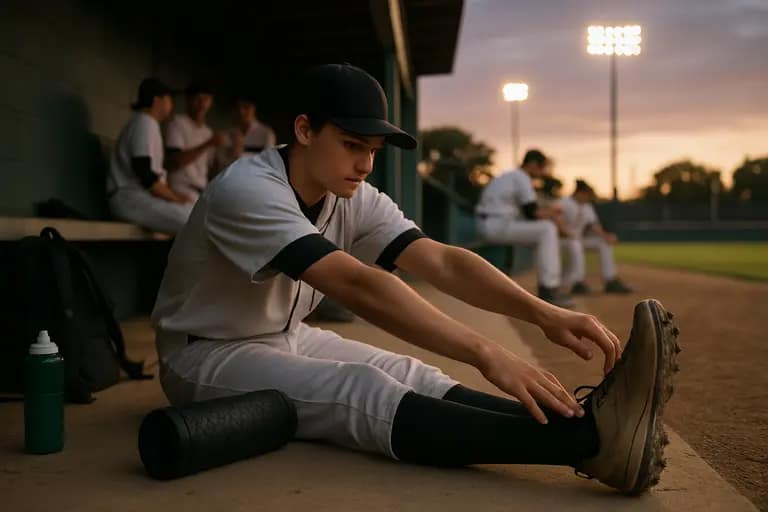
Postgame Nutrition And Fluids
The research packet included recovery practices that are simple but often missed: take in carbohydrates and protein within 30 minutes after games or practices, replace fluid lost during play, and use sports drinks for electrolyte replacement when heat and sweat loss are high. Those are not complicated steps, but they require planning. If the only food available after a game is whatever can be found near the complex, the player may go too long without the fuel needed for the next game.
Families should pack recovery food that the player already tolerates. Tournament day is not the best time to test something new. A player who is anxious, hot, or tired may not want a full meal between games, so smaller options can help. Recovery should also include dry clothes, time off the feet, and a shaded place to reset. A player does not need to spend every break swinging a bat or throwing a ball.
Medical Checks And Equipment Habits
The research also noted that safety balls and faceguards are associated with reduced risk of facial and ball-related injuries. For tournament families, that point connects to a wider safety habit: check equipment before the weekend, not during it. Batting helmets, catcher masks, throat guards, cups, cleats, gloves, and braces should be inspected early enough to replace or repair anything that has worn down.
Overuse risk deserves the same attention. The research notes stated that youth throwing injuries, especially elbow injuries, are increasing and that throwing overuse is the main mechanism. They also pointed to Pitch Smart adherence by parents being associated with lower injury odds. Families do not need to turn that into fear. They should turn it into structure: no year-round max-effort throwing, no hidden bullpens, no ignoring soreness, and no treating every weekend as the most important weekend of the calendar.
What The Fall Super Regional Taught Families
The main lesson from the Fall Super Regional is that a two-day event can reveal how prepared a player really is. Skill matters, but so do routines. The player who arrives rested, knows his role, warms up with purpose, eats on time, and recovers after each game is giving himself a better chance to compete and develop. The player who treats the weekend as a series of rushed reactions is more likely to fade physically and mentally.
For Texas youth baseball families, the Waller event should be reviewed through a development lens. Did the weekend show that the player needs more arm-care consistency? Did it expose a lack of pitching depth on the roster? Did it show that the family needs a better meal plan or earlier travel window? Those answers can shape the next month of training.
The best tournament weekends do not end when the last out is recorded. They produce better habits for the next practice, the next bullpen, and the next event. That is where families, coaches, and players can turn a completed Perfect Game weekend into real progress.