

The Pitching Boot Camp scheduled for October 3-4, 2026, gives young Texas pitchers a focused window to learn, be assessed, and leave with clearer development priorities. Parents can help most by treating the weeks before camp as a gradual build, not a last-minute push. The goal is not to show up sore, overthrown, or anxious. The goal is to arrive prepared enough to listen, move well, throw safely, and remember what coaches are teaching.
The research notes identify this event as the Youth Elite Pitcher’s Boot Camp at Texas Baseball Ranch. They also describe key camp features such as high-speed video from multiple angles, a movement and mobility screening through the Ranch Assessment Tool, arm-care instruction, and a parent meeting component. Those details matter because the camp is not just about throwing harder for two days. It is about giving a young athlete and family a clearer plan for long-term pitching development.
Pitching Boot Camp Prep Timeline
Pitching Boot Camp Readiness Check
A useful first question is simple: has your player been throwing consistently, or is the camp the first serious throwing block in several weeks? The research notes recommend 3-4 weeks of steady throwing before camp, with at least three throwing days per week. That does not mean three max-effort bullpen days. For most youth pitchers, it means a sensible mix of catch play, warm-ups, cool downs, and some light mound or flat-ground work if the arm is responding well.
If your player arrives at Pitching Boot Camp after a layoff, coaches may spend more energy managing fatigue than teaching movement patterns. A rushed ramp can also make a young pitcher associate instruction with soreness. Parents should ask the player after each throwing day: How does the shoulder feel? How does the elbow feel? Did the ball come out normally? Did the arm feel heavy late? Those answers should guide the next session more than a calendar on the refrigerator.
A Simple Three-Week Ramp
For a player already active in fall baseball, the ramp may mean reducing chaos rather than adding work. Keep the throwing week predictable. Avoid stacking a long bullpen, a tournament pitching appearance, and a hard private lesson within a short stretch. For a player who has been lightly active, start with catch play and movement work before building toward short bullpens. Do not treat the final week as a tryout week. It should feel like a taper, with the athlete moving well and sleeping well before travel.
Families wanting a broader seasonal planning lens can compare this camp build with Texas Baseball Ranch fall/winter plans, especially if they are deciding how much throwing, training, and rest fits around school and fall competition.
Workload Guardrails Before Camp
Age-Based Pitch Limits
The goal before Pitching Boot Camp is readiness, not proving durability. Parents should track recent pitches and high-effort throws, even if those throws happen during lessons or practice rather than games. MLB and USA Baseball Pitch Smart list daily pitch limits of 50 pitches for ages 7-8, 75 for ages 9-10, and 85 for ages 11-12, with rest guidance tied to pitch totals and age group Pitch Smart pitching guidelines. Those are guardrails, not targets.
Many young pitchers are not injured by one dramatic mistake. Problems can build through repeated small decisions: pitching on tired legs, throwing a bullpen after a high-pitch weekend, skipping warm-up work, or hiding elbow discomfort because a camp is coming up. A 2024 review of youth baseball throwing injuries and prevention strategies discusses workload, rest, fatigue, and prevention as connected pieces rather than separate topics youth throwing-injury review.
Watch for Fatigue, Not Just Pain
Pain is a clear stop sign. Fatigue can be more subtle. Parents should watch for a sudden drop in command, a lower arm slot, a pitcher opening early to create velocity, or a young athlete rubbing the elbow between throws. Loss of velocity during an outing or practice can also be a warning. If a player reports shoulder or elbow pain, stop throwing and seek qualified medical guidance rather than trying to save the session.
- Track game pitches, bullpen pitches, and hard lesson throws in one place.
- Build rest days into the calendar before and after the October 3-4 camp.
- Ask about soreness the next morning, not only right after throwing.
- Tell the player that reporting pain is maturity, not weakness.
Movement, Mechanics, And Coachability
Prepare For Video Feedback
The camp research notes describe high-speed video from multiple angles. That can be powerful for a young athlete, but it can also feel exposing if the player is not used to seeing himself throw. Before camp, parents can record a few low-pressure clips from the open side, behind the mound, and behind the catcher. Do not turn the living room into a pitching lab. The point is to help the athlete understand that video is a teaching tool, not a judgment.
Ask simple questions after watching: What do you notice about your balance? Are you finishing in a fielding position? Does your head stay stable as you move down the mound? Those questions keep the player engaged without pretending the parent is the pitching coach. If the athlete learns to observe his own movement calmly, he may absorb camp feedback faster.
Build Movement Before Chasing Velocity
The research notes emphasize mobility, flexibility, and strength patterns such as hip hinge, thoracic rotation, ankle mobility, core strength, and posterior-chain strength. Parents do not need to design a professional training program. They can support basic consistency: regular dynamic warm-ups, bodyweight strength done with clean form, and recovery habits that match the player’s age and training age.
For youth pitchers, better movement often shows up as better direction, timing, and repeatability. A player who cannot hinge well, rotate through the upper back, or control the front side may struggle to use instruction on the mound. That does not mean every limitation must be fixed before camp. It means the athlete should arrive familiar with moving his body on purpose.
Texas Logistics For The October 3-4 Camp
Heat, Hydration, And Sleep Planning
Early October in Texas can still feel warm, especially for players traveling from cooler parts of the state or spending long blocks outside. Hydration should start before the drive, not at the field. Pack water, electrolyte options your child has already used, easy snacks, and meals that will not sit heavy before activity. Avoid testing new supplements, energy drinks, or unfamiliar pre-workout products before a youth pitching event.
Sleep is one of the easiest performance tools to protect and one of the first things families lose during travel. If the drive is long, plan arrival time so the player is not rushed into camp tired. A young athlete who sleeps poorly may struggle to regulate emotions, process coaching, and recover between sessions. Parents can help by setting a calm evening routine and keeping the schedule realistic.
Packing For Learning, Not Just Throwing
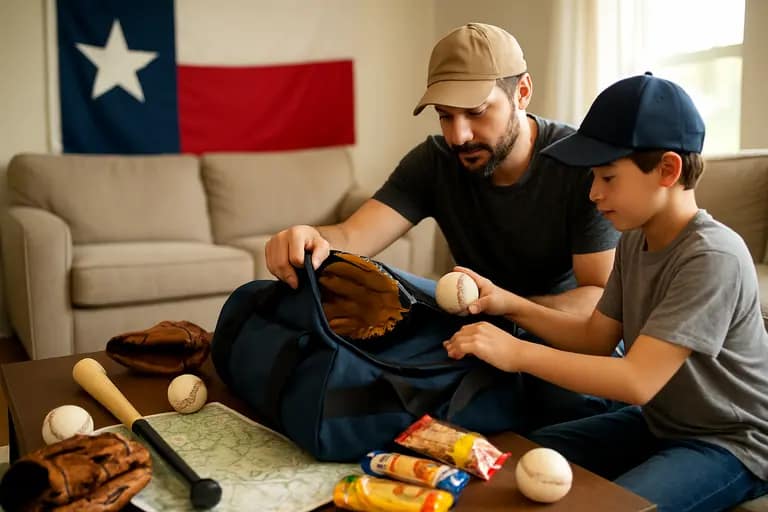
Bring the obvious baseball gear: glove, cleats or turf shoes as appropriate, athletic clothes, and any personal arm-care bands or tools the athlete already uses. Also bring a notebook or notes app plan. The parent meeting described in the research notes is a chance to hear the camp philosophy and understand what to support after returning home. If both parent and player try to remember every detail from memory, the best lessons may fade by the next week.
Parents should decide in advance how they will handle feedback. Some players want to talk through every detail in the car. Others need food, quiet, and time. A good question after each day is: What is one thing you understood better today? That keeps the conversation focused without turning the ride home into a lecture.
Keeping Pitching Boot Camp Lessons Working At Home
The First Week Back
Treat Pitching Boot Camp as the start of a clearer plan, not the finish line. The first week after camp should protect recovery and organize notes. Parents can help the player identify two or three takeaways: one movement priority, one throwing or arm-care habit, and one mindset cue. Trying to fix ten things right away usually leads to frustration.
If the athlete receives drills or corrective work, ask where each drill fits: warm-up, pre-throw, post-throw, strength day, or recovery day. A drill without a place in the week often disappears. A short routine done consistently is usually more useful for a young player than a long routine done twice and forgotten.
Measuring Progress Without Adding Pressure
Texas baseball families often live in a busy cycle of tournaments, lessons, school, and team practices. After camp, resist the urge to measure progress only by radar readings in the next outing. Better early markers may include less arm soreness, better warm-up discipline, improved strike throwing during catch play, cleaner direction down the mound, or a pitcher who can explain his routine without being prompted.
The best parent role is steady and specific: track workload, protect rest, encourage honest communication, and let coaches coach. If the October 3-4 camp gives your young athlete clearer language for his body and delivery, the family’s job is to help those lessons survive the next busy month of baseball.